
Kenya is one of East Africa’s most active vehicle import markets and for good reason. With a strong demand for commercial pickups, minibuses, and premium SUVs, Kenyan dealers who source smartly from Dubai consistently outperform those relying on local stock. The pricing advantage is real, the vehicle quality is high, and the process when you know it is straightforward.
At WorldWide Auto FZCO, we export Toyota vehicles from Dubai to Kenya regularly. This guide covers everything a Kenyan dealership or importer needs to know in 2026: the rules, the costs, the documents, and how to avoid the mistakes that turn a profitable import into a headache.
Why Kenyan Dealers Choose Dubai Over Other Markets
Japan used to be the default source for Kenyan vehicle imports. That’s changing and Dubai is leading the shift. Here’s why.
Zero export tax from the UAE. The UAE charges no export duty or VAT on outgoing vehicles. That pricing advantage flows directly into your landed cost, making Dubai-sourced Toyotas consistently competitive even after Kenyan duties are applied.
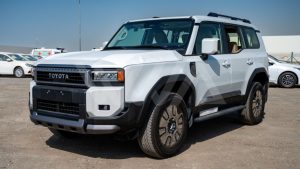
GCC-spec vehicles built for African conditions. A Toyota Hilux or Land Cruiser built to GCC specification is engineered for extreme heat, rough roads, and dusty environments conditions that mirror much of Kenya’s terrain. These aren’t watered-down European-spec vehicles. They’re built tough, they’re well-understood in the Kenyan market, and they hold resale value.
Direct shipping from Jebel Ali to Mombasa. Dubai’s Jebel Ali Port runs regular, reliable shipping lines to Mombasa one of the best-connected freight corridors in the region. Transit time runs approximately 10 to 14 days, meaning faster stock turnaround for your dealership.
Full inventory depth. From brand-new Toyota Hilux Revos and HiAce minibuses to Land Cruiser 200 Series and Prado models, Dubai carries the widest available GCC-spec Toyota stock anywhere. Browse WorldWide Auto’s current Toyota stock here.
Kenya Import Regulations: What You Must Know in 2026
Kenya has clear, well-enforced import rules. Get these right before you order not after your vehicle is already at sea.
Right-Hand Drive Only
All passenger and commercial vehicles imported into Kenya must be Right-Hand Drive (RHD). Left-Hand Drive vehicles are prohibited except for special-purpose vehicles such as ambulances and fire engines. Every Toyota WorldWide Auto supplies for the Kenyan market is RHD as standard.
8-Year Age Limit
Vehicles must be no more than 8 years old from the date of first registration at the time of import. Importing in 2026 means your vehicle must have been first registered in 2017 or later. This rule is strictly enforced by the Kenya Revenue Authority (KRA) vehicles that exceed it are rejected at customs with no recourse.
JEVIC Pre-Export Inspection
The Kenya Bureau of Standards (KEBS) requires all used vehicles imported from Dubai to undergo a pre-export Roadworthiness Inspection (RWI) conducted by JEVIC (Japan Export Vehicle Inspection Centre) or QISJ (Quality Inspection Services Japan) before shipment. The inspection covers brakes, safety systems, structural integrity, and emissions compliance. Inspection fees start at USD 145 or 0.6% of FOB value, whichever is greater. WorldWide Auto coordinates JEVIC inspections directly it’s part of our standard process for every Kenya-bound unit.
Original Logbook No Substitutes
This is the rule that trips up many first-time importers. Kenya requires the authentic original vehicle logbook from the country of origin. A Certificate of Export issued by Dubai Police or any other authority is explicitly not accepted as a substitute by KRA. If the logbook is not in English, a certified translation must be provided by the relevant Embassy or Consulate in Kenya. WorldWide Auto ensures the correct original documentation is included with every export.
Import Declaration Form (IDF)
The IDF must be obtained from KRA through the Kenya TradeNet System before your vehicle is shipped. The fee is 3.5% of the CIF value (minimum USD 5,000 or 2.25% of CIF whichever is higher). Your licensed Kenyan clearing agent handles this on your behalf.
Documents Required to Clear a Vehicle at Mombasa Port
Have these ready before the vessel arrives. Port clearance with complete documentation typically takes 3 to 5 working days.
- Original Commercial Invoice — including full vehicle specs (make, model, year, chassis number, engine number)
- Original Bill of Lading — two copies; must include chassis and engine details
- Authentic Original Vehicle Logbook — cancelled in country of origin; English translation if required
- JEVIC Certificate of Roadworthiness — valid for 60 days from issue date
- Certificate of Conformity (CoC) — issued by KEBS-authorised inspection agency; valid for 90 days
- Import Declaration Form (IDF) — pre-arranged through Kenya TradeNet System
- KRA Customs Entry Form — submitted by your clearing agent
- Importer identification — national ID or passport; KRA PIN certificate for business importers
Missing or incorrect documents are the number one cause of port delays. Contact WorldWide Auto before your order and we’ll walk you through exactly what’s needed for your specific shipment.
Kenya Import Duties & Taxes: What It Actually Costs
Kenyan import duties are calculated on the CIF value (Cost + Insurance + Freight) as determined by KRA. The authority applies a depreciation schedule based on vehicle age — older vehicles within the 8-year limit carry lower customs values, which reduces the duty base. Here’s the full tax breakdown:
| Tax / Levy | Rate | Applied On |
|---|---|---|
| Import Duty | 35% | CIF value |
| Excise Duty | 20% (≤1500cc) / 25% (>1500cc) | CIF + Import Duty |
| VAT | 16% | CIF + Import Duty + Excise Duty |
| Import Declaration Fee (IDF) | 3.5% (min. USD 5,000 or 2.25%) | CIF value |
| Railway Development Levy (RDL) | 2% | CIF value |
| Port Handling & Clearing | Variable | ~USD 300–800 (Mombasa) |
Note: KRA applies depreciation rates of 5–10% per year up to a maximum of 65%, which reduces the customs value for older vehicles within the 8-year limit. Always use a licensed clearing agent to calculate your accurate landed cost before committing to a purchase.
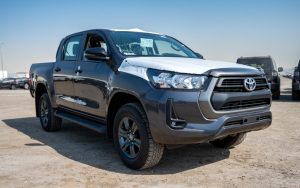
Real-world example: A 2021 Toyota Hilux Double Cab purchased in Dubai at USD 22,000 CIF may attract approximately USD 11,000–13,000 in total Kenyan taxes and duties. Even at that cost, a Dubai-sourced unit often lands below comparable locally-traded stock and in significantly better condition.
Best Toyota Models for the Kenyan Market
Kenya’s road network a mix of well-paved highways and demanding rural routes creates a specific set of vehicle requirements. These are the models WorldWide Auto recommends most consistently for Kenyan dealers:
Toyota Hilux (Revo / Rocco)
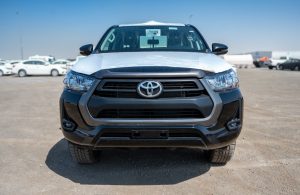
Kenya’s single most popular commercial vehicle. The Hilux dominates transport, agriculture, construction, and government fleet procurement. The latest Revo and Rocco generations command premium resale values and move fast on any lot. Available in single cab, extra cab, and double cab configurations all RHD from WorldWide Auto’s Dubai stock.
Toyota HiAce (High Roof Minibus)
The backbone of Kenya’s public transport sector. Matatu operators and fleet buyers consistently seek high-roof HiAce minibuses in 14–18 seater configurations. Demand is steady year-round and stock turns over quickly. A reliable anchor product for any Kenyan dealership importing from Dubai.
Toyota Land Cruiser 200 / 300 Series
Premium demand in Nairobi and among NGOs, government agencies, and safari operators is strong and consistent. GCC-spec Land Cruisers from Dubai with their desert-rated engines and reinforced suspension are exactly what this market wants. High margin, high resale, high demand.
Toyota Prado (150 Series)
The urban professional’s SUV of choice. Nairobi’s growing middle class has strong appetite for the Prado it offers Land Cruiser capability in a more accessible price bracket. A smart addition to any dealership stocking premium units.
Toyota Fortuner
An increasingly popular mid-tier SUV with strong appeal to younger buyers and small business owners. Competitive pricing from Dubai makes the Fortuner an excellent volume driver for dealerships targeting the KES 3–5 million price segment.
View all available models and current stock at WorldWide Auto →
How the Import Process Works — Step by Step
Here’s exactly what happens when you source a vehicle from WorldWide Auto for delivery to Kenya:
- Enquire with your requirements — tell us the model, year range, quantity, and your target landed cost. Use our contact page or WhatsApp.
- Receive your stock options — we send full photos, videos, chassis numbers, mileage, and pricing for matched units.
- Confirm and pay — a proforma invoice is issued. Payment is made to WorldWide Auto FZCO’s official Dubai business bank account only. No informal transfers, no third parties.
- JEVIC inspection arranged — we coordinate the pre-export roadworthiness inspection in Dubai and obtain your Certificate of Conformity.
- Shipped from Jebel Ali — your vehicle is loaded and dispatched. You receive the Bill of Lading, commercial invoice, and all export documents promptly.
- Kenya-side clearance — your licensed Kenyan clearing agent submits the IDF, customs entry, and supporting documents. Clearance typically takes 3–5 working days post-arrival.
- Collect and sell — vehicle is released, registered with NTSA, and ready for your forecourt.
Start Your Kenya Import with WorldWide Auto
WorldWide Auto FZCO is a Dubai-based vehicle export company purpose-built for African dealerships and importers. We handle the full Dubai side of your import sourcing, inspection, documentation, and shipping. You focus on what you do best: selling great vehicles to Kenyan buyers.
Whether you need a single HiAce or a container of Hilux Revos, we’re ready to move quickly, price fairly, and document everything correctly.
Browse our current Toyota stock
Contact our team to discuss your next order
WorldWide Auto FZCO — worldwideauto.ae